January 20, 2026
For Scope Australia, the project’s logistics and cartage partner, it presented an opportunity to put five years of strategic planning into action and to showcase the company’s evolution from contractor into an environmental logistics powerhouse.
Representing one of Scope’s flagship projects for 2024, the Nyaal Banyul precinct is now nearing completion and stands as the centrepiece of the Geelong City Deal, spanning 1.6 hectares of prime waterfront land in the heart of the CBD. Designed with long-term community benefit and economic growth in mind, the development also carried dual weight for Scope: proving its operational model at scale on one of the region’s most complex builds while helping shape the very landscape many of its team call home.
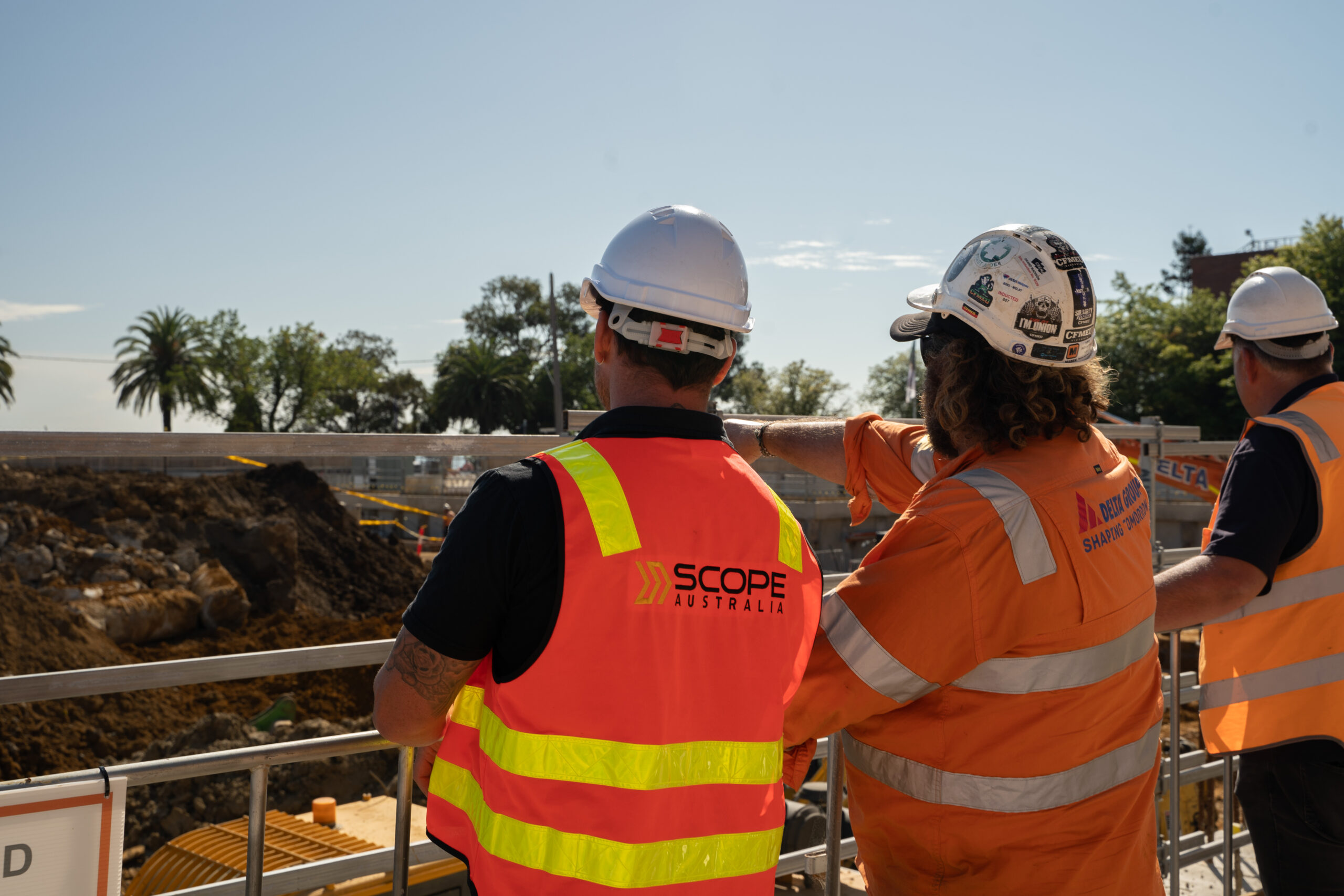
Scope’s role was clear from day one: through disciplined coordination it redirected more than 120,000 tonnes of construction waste, upheld environmental standards, and kept the project moving without delay. Materials were imported when required, recycled where possible, and always handled with its circular mission front of mind.
“We have spent years reshaping Scope around circular systems,” says Managing Director John Kennedy. “Seeing those efficiencies hold under the pressure of a project this size is proof the hard work has paid off.”
On a project of this scale, conditions shift: weather turns, tip sites close, and hundreds of truck movements stack up by the hour. At peak, more than 25 trucks were dedicated to the site each day, demanding constant movement, tight scheduling, and zero margin for error, the kind of capacity only disciplined and proven systems can manage.
With a strong grasp of the region and its civil works market, Scope’s ability to pivot in real time is a key factor that sets the team apart. If one option closes, loads are redirected across other projects and through trusted partners with minimal extra drive time. Running multiple projects in parallel creates headroom to reallocate trucks and keep efficiency high.
“Efficiency, volume and safety were always the non-negotiables,” Kennedy explains. “This project put those demands under pressure, and it showed our systems are strong enough to meet them at scale.”
Such capability is the outcome of Scope’s long-term investment in circular systems and disciplined operations. The business moved away from a traditional contractor model to become a purpose-led environmental logistics partner, filling a gap its directors believed the industry had overlooked. Backed by deliberate investment, the goal for Scope is clear: deliver infrastructure outcomes that are both commercially sound and environmentally responsible.
“We saw a gap in how materials were being handled and a bigger opportunity to do better,” Kennedy says. “We invested in infrastructure, rebuilt our systems, and committed to giving materials a second life. That shift has not only secured more projects but redefined what Scope delivers, and the standard of discipline and teamwork it demands.”
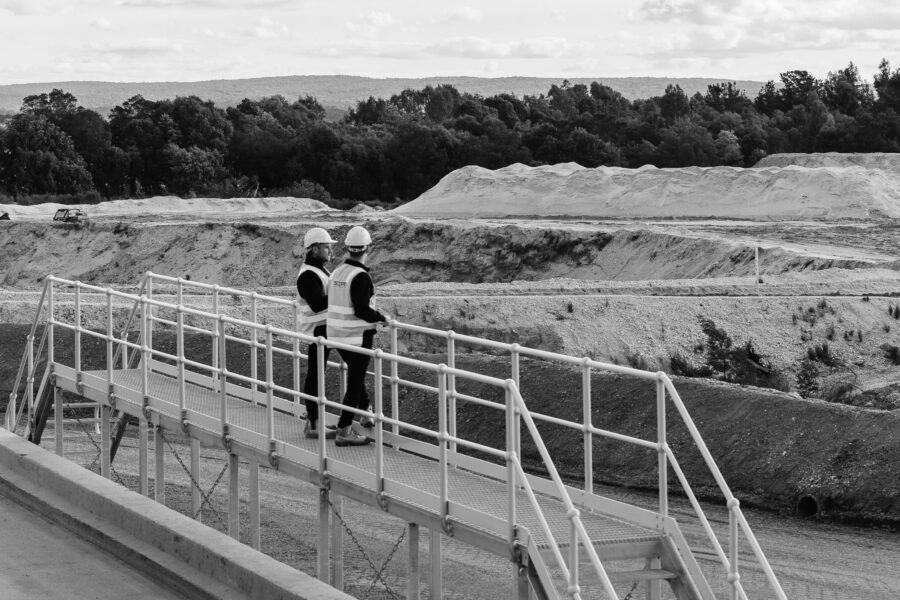
At the centre of Scope’s evolving model is its purpose-built, all-weather processing facility in South West Victoria. As part of its broader offering, the facility processes and distributes sand products for wind farms, engineered fill, and varying grades of crushed rock, enabling greater control over quality, compliance, and project readiness. By integrating the site into daily operations, Scope reduces risk, secures supply, and keeps projects moving even when conditions turn against them.
“This facility was a necessary expansion for us,” Kennedy says. “It gives Scope the ability to manage material flows with real control, which means fewer delays, lower landfill volumes, and stronger outcomes for clients, councils, and communities. It also positions us to take on more of the major projects that are coming to regional Victoria.”
That expansive approach is already proving its worth beyond Geelong. At the Ballarat Base Hospital redevelopment, Scope managed early works by removing more than 80,000 tonnes of material scheduled for reuse across the regional road network, a clear extension of the Nyaal Banyul model in action and proof that disciplined systems in one sector can readily scale into others.
Today, more than 100 Scope trucks run daily across Victoria, backed by a skilled regional workforce and a centralised headquarters in Geelong, capacity that enables the business to deliver projects demanding both scale and precision.
Looking ahead, Scope is expanding its regional network, broadening recovery streams tailored to project needs, and working more closely with government partners from the earliest stages of delivery. Investment in digital infrastructure will add even greater traceability and accountability.
The success at the Geelong Convention Centre has confirmed what Scope already knew: its systems are built to deliver at scale, and they perform under pressure. That trust has given the company confidence to push its model further into health, transport, and government-led precincts.
What defines Scope today is not just capacity, it is structure. Circular thinking is embedded from the outset, guiding every stage with clarity and purpose. From site planning to material reuse, the approach is deliberate, efficient, and measurable. Scope has shown that infrastructure does not have to choose between efficiency and responsibility, it can, and must, deliver both.